 subclass 820 temporary visa and 801 permanent visa">
By Nanak Migration Group Editorial Team · Updated 2026-09-01
Onshore partner visas (subclass 820 and 801) require applicants to lodge from within Australia. Remain there until the 820 is approved, while offshore partner visas (subclass 309 and 100) suit applicants living abroad. Nanak Migration Group, a MARA-registered agency, guides clients through both pathways to
What is the difference between onshore and offshore partner visas?
The core difference between onshore and offshore partner visa Australia applications comes down to location. An onshore application uses the 820 visa (temporary) followed by the 801 visa (permanent). The applicant must be inside Australia when submitting and when the temporary visa is granted. An offshore application uses the subclass 309 visa (temporary) followed by the 100 visa (permanent). The applicant must be outside Australia when applying and when the temporary visa is approved.
| Feature | Onshore (Subclass 820/801) | Offshore (Subclass 309/100) |
|---|---|---|
| Applicant location at lodgement | Inside Australia | Outside Australia |
| Applicant location at temporary visa grant | Inside Australia | Outside Australia |
| Permanent visa grant location | Inside or outside Australia | Inside or outside Australia |
| Work rights during processing | Usually granted (Bridging Visa A) | Not applicable until visa granted |
Despite these location differences, the spouse visa Australia requirements remain identical. Both pathways demand proof of a genuine and lasting relationship with a commitment to a shared future. The Department of Home Affairs applies the same relationship assessment criteria regardless of where the application originates.
Can an applicant switch from offshore to onshore after applying?
No. Once an applicant lodges an offshore 309 visa application, they cannot convert it to an onshore 820 application. If the applicant enters Australia on a different visa while the 309 is processing, the offshore application continues as lodged. The applicant must wait for a decision on the 309 or withdraw it and submit a fresh onshore application.
Which pathway processes faster?
Processing times vary significantly between the two streams. Onshore 820 applications often receive a Bridging Visa A within weeks, allowing immediate work and Medicare access while the application processes over 12-24 months. Offshore 309 applications typically process faster at the initial stage (6-12 months). Provide no interim work rights during the wait. Neither pathway guarantees a faster permanent visa outcome, as both require a two-stage assessment over approximately two years.
What are the prerequisites for applying for a partner visa?
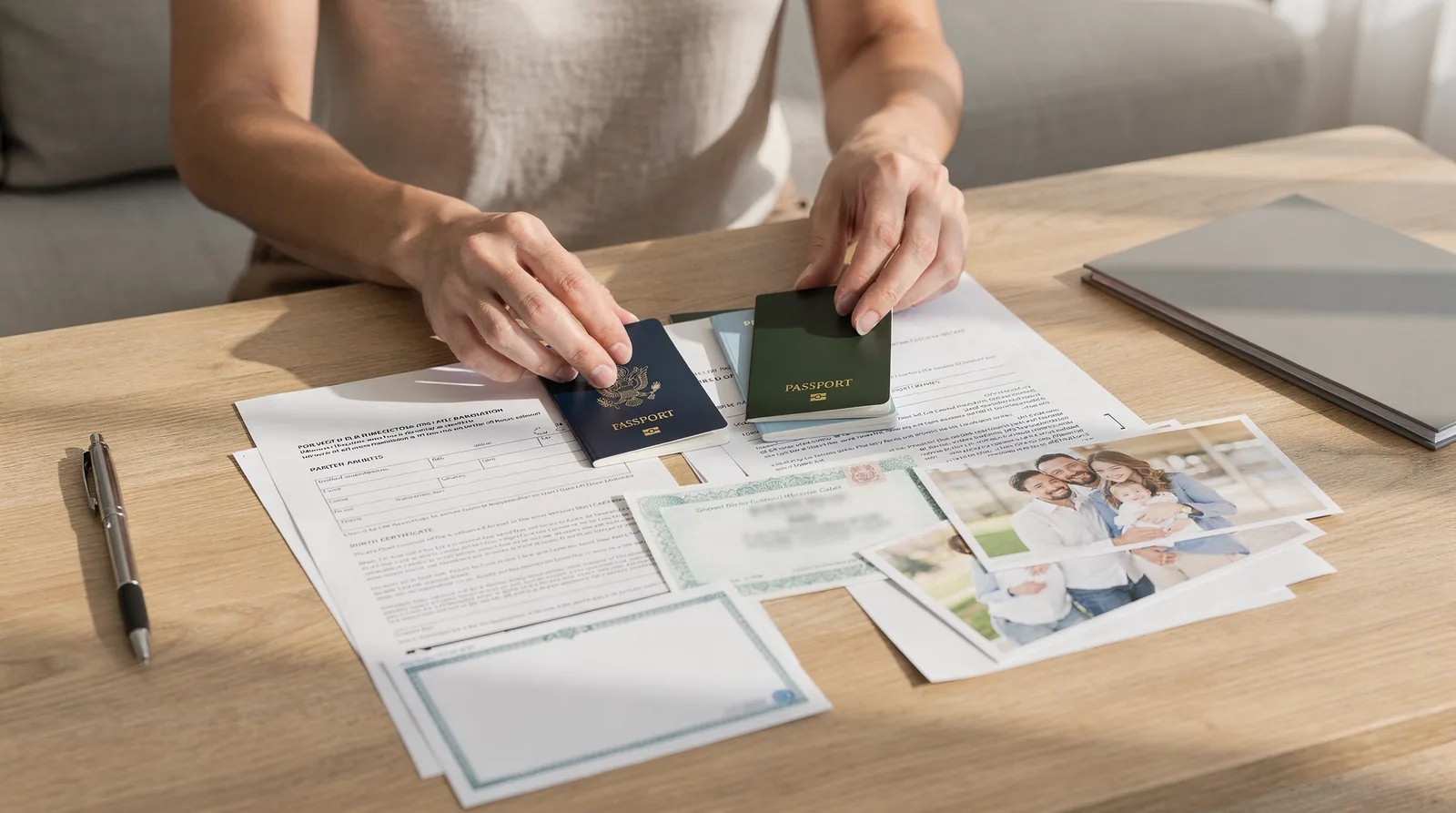
A partner visa australia application requires the applicant to be the spouse or de facto partner of an Australian citizen, Australian permanent resident, or eligible New Zealand citizen. The relationship must be genuine and lasting, with both parties committed to a shared future in Australia. Without meeting this core eligibility, the application cannot proceed.
Who can sponsor a partner visa applicant?
An eligible sponsor must be an Australian citizen, Australian permanent resident, or eligible New Zealand citizen. The sponsor provides financial and accommodation support for the applicant during the visa process. The Department of Home Affairs assesses the sponsor's capacity to meet these obligations before approving the sponsorship.
What are the two stages of the partner visa pathway?
The application process involves two distinct stages. The first stage grants a temporary 820 visa, which allows the applicant to live and work in Australia while the relationship is assessed. The second stage, typically assessed after two years, grants a permanent visa (subclass 801) if the relationship remains genuine and ongoing.
The spouse visa australia requirements include:
- Evidence of a genuine and continuing relationship
- Proof of shared financial commitments and living arrangements
- Character and health checks for both applicant and sponsor
- No prior visa cancellations or breaches of Australian immigration law
The partner visa pathway can ultimately lead to the grant of permanent residency in Australia. Applicants must be inside Australia at the time of submitting the 820 visa application. When the temporary visa is approved. The permanent stage may be granted whether the applicant is inside or outside Australia.

How do I apply for an onshore 820 visa step by step?
Applying for the onshore 820 visa requires the applicant to be physically present in Australia at the time of lodgement. The Department of Home Affairs processes this application in two distinct stages, beginning with the temporary visa and moving to a permanent residency assessment. Clients must prepare comprehensive evidence of their relationship before submitting the application through an ImmiAccount.
Step 1: Confirm eligibility and location requirements
The applicant must hold a valid substantive visa or a bridging visa that permits lodgement of a further application. Being inside Australia at submission is a mandatory condition for the partner visa australia onshore pathway. The sponsor must be an Australian citizen, permanent resident, or eligible New Zealand citizen.
Step 2: Gather evidence of a genuine relationship
The first stage involves a detailed assessment of the relationship for the grant of the temporary 820 visa. Evidence must demonstrate the relationship is genuine and continuing, including financial arrangements, household nature, social context, and commitment to a shared future. Meeting the spouse visa australia requirements means providing documents covering the entire relationship period.
Step 3: Lodge the combined application
Applicants submit both the temporary (subclass 820) and permanent (subclass 801) visa applications together online. The application fee covers both stages, though additional charges apply for subsequent partner assessments.
Step 4: Await the temporary visa grant
If successful, the applicant receives the temporary 820 visa. This visa grants work rights and access to Medicare while the holder remains in Australia.
Step 5: Prepare for the permanent stage assessment
The second stage assessment for the permanent visa (subclass 801) usually occurs more than two years after the date of the original application. Clients may obtain the permanent visa without waiting the full two years if, at the time of making the application, the relationship had already lasted three years, or two years if the couple had a dependent child.
What happens after the 820 visa is granted?
The holder holds the temporary 820 visa until the Department completes the second-stage assessment. During this period, the relationship must remain genuine and ongoing. Any significant change in circumstances, such as separation, must be reported immediately.
Can the permanent visa be granted earlier than two years?
Yes, an accelerated pathway exists. If the applicant and sponsor had been in the relationship for three years at the time of application. Two years with a dependent child, the permanent visa may be granted without the standard waiting period. This exception recognises established long-term commitments.
How do I apply for an offshore 309 visa step by step?
Applying for an offshore partner visa australia (subclass 309) requires the applicant to be outside Australia at both the time of lodgement and the time of grant. The subclass 309 visa is the first step toward the Partner Visa 100, which provides permanent residency. This visa allows couples to live together in Australia while the permanent residency application is processed.
Step 1: Confirm eligibility and gather evidence
Before lodging an application, the applicant must demonstrate a genuine and lasting relationship with an Australian citizen, permanent resident, or eligible New Zealand citizen. Evidence includes financial records, household documents, social context, and proof of commitment. The spouse visa australia requirements demand thorough documentation of the relationship's nature and duration.
Step 2: Lodge the application from outside Australia
The applicant submits the visa application while physically outside Australia. The Department of Home Affairs assesses the relationship during this stage. Processing times vary, but the applicant remains offshore until the visa is granted.
Step 3: Await the grant of the subclass 309 visa
Once approved, the subclass 309 visa permits the applicant to enter and live in Australia. The couple can reside together while the permanent stage (subclass 100) is assessed. The temporary visa typically lasts two years before the permanent residency decision.
What is the difference between the 309 visa and the Prospective Marriage visa?
The Prospective Marriage visa (Subclass 300) is specifically for applicants outside Australia. Serves as a pathway to the 820 visa post-marriage. This visa is suitable if the couple is not yet married but intends to wed within nine months of arrival. The subclass 309 visa, by contrast, requires the couple to already be married or in a de facto relationship at the time of application.
Can the applicant work on a subclass 309 visa?
Yes. The subclass 309 visa grants full work rights. The applicant can work for any employer in Australia while awaiting the permanent visa decision. This provision allows couples to establish financial stability together during the processing period.
What common mistakes should I avoid with partner visa applications?
A critical error applicants make is not understanding whether to apply while their partner is in Australia on a visitor visa or after they return to their home country. This decision between an onshore or offshore application depends on various factors that must be carefully considered. Misjudging this choice can lead to application refusal, wasted fees, and significant delays in reuniting with a spouse.
How does choosing the wrong application location cause problems?
Applying for a partner visa australia from the wrong location creates immediate complications. The onshore 820 visa requires the applicant to be physically present in Australia at the time of lodgement and approval. If an applicant lodges an onshore application while offshore. Vice versa, the Department of Home Affairs may reject the application as invalid. This mistake costs applicants both the application fee and valuable time.
What documentation errors do applicants commonly make?
Failing to meet spouse visa australia requirements regarding evidence of a genuine relationship is another frequent mistake. Applicants often submit insufficient proof of financial interdependence, shared living arrangements, or social recognition of the relationship. The Department requires comprehensive documentation across four key areas:
- Financial aspects (joint accounts, shared bills)
- Nature of the household (living arrangements, housework distribution)
- Social context (joint travel, photos with family, recognition from friends)
- Nature of the commitment (knowledge of each other's circumstances, future plans)
Nanak Migration Group, led by Registered Migration Agent Navpreet Aulakh with over a decade of experience, helps clients navigate these complex requirements. The agency offers consultations in English, Hindi, and Punjabi, focusing on assisting South Asian communities with building strong, compliant visa applications that avoid these common pitfalls.
Conclusion
In closing, navigating the distinctions between onshore and offshore partner visas requires expert guidance tailored to your circumstances. Nanak Migration Group's MARA-registered agents bring over a decade of migration law experience to help you understand which pathway aligns with your situation, ensuring compliance at every step. With offices across Melbourne, Sydney, Brisbane, and Perth, and consultations available in English, Hindi, and Punjabi, we combine detailed case strategy with comprehensive support—including integrated accounting services—to guide your journey to Australia with confidence.